
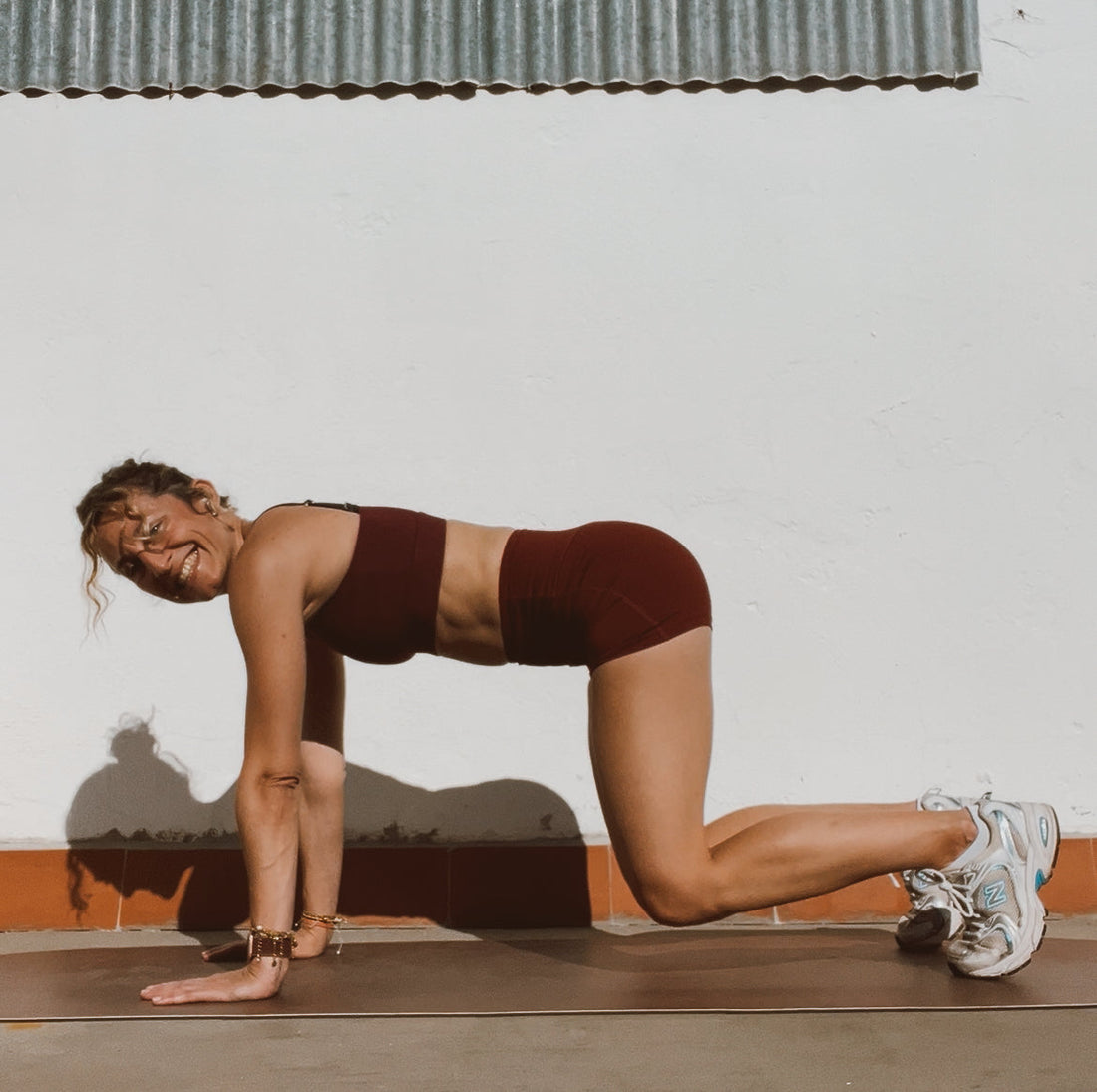
Static & Dynamic Planking: What are the benefits?
Share
I'm a big fan of core training: ever since I "incorporated" exercises like "plank," "bear plank," "plank with leg raise," etc., into my strength training sessions, I've clearly seen my abdominal muscles tone up, my back pain disappear... In short, for me, core training is the best way to have a "SUPER CORE"!
You can also find some of these exercises in the Maison Athlē Studio video packs!
A brief explanation of what it is and the benefits you can get from it:
Core training, whether static or dynamic, is an essential exercise for strengthening the abdominal muscles and improving trunk stability. By performing static core exercises, such as the plank, you work on muscle endurance and tone, maintaining a fixed position for a prolonged period. This helps strengthen deep muscles, improve posture, and reduce the risk of lower back pain.
Dynamic core training, on the other hand, involves introducing movements while maintaining constant activation of the stabilizing muscles. This makes the exercise more intensive, as it also engages coordination, balance, and functional strength. By integrating movements such as planks with rotations or displacements, dynamic core training not only improves stability but also mobility and agility.
The common benefits of both forms of core training include better postural control, improved athletic performance, and a reduced risk of injury. In addition, these exercises engage many muscle groups, making them very effective for a full-body workout.